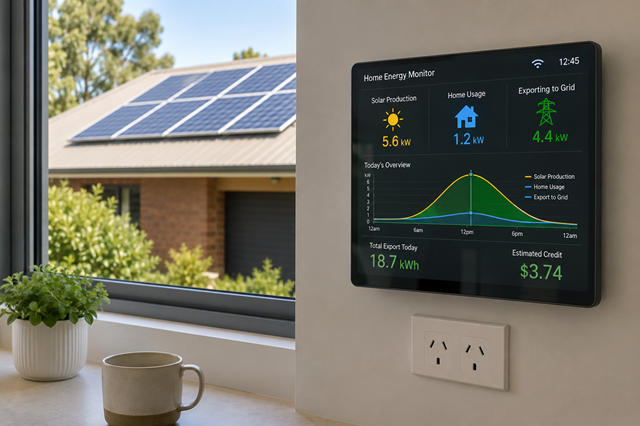
Midday solar can be both abundant and awkward. The roof may be producing well while the house is quiet, the EV is away, and the battery is already full. If export credits are low, that extra solar may be worth less than the power the home buys back later.
A home energy monitor helps reveal that gap. It shows whether the home is using solar when it is produced or exporting it and importing again after sunset.
An export credit is the value a utility gives for solar electricity sent to the grid. If the credit is close to the retail import rate, a solar-only system may work well. If the credit is much lower, storing or shifting solar use can become more attractive.
Berkeley Lab's Tracking the Sun research reported rising storage attachment in markets where export compensation changed, including California's shift to net billing. The lesson is not that every home needs a battery. It is that rate design changes how valuable self-consumption can be.
A solar battery storage system can help keep more solar energy available for evening use when the monitor shows a pattern of midday exports and nighttime imports.
For export-credit planning, the important view is simple: solar production, household consumption, battery charge, and grid export/import on the same timeline. If those streams are separated across three apps, the homeowner may miss the real pattern.
The monitor should also show flexible loads. EV charging, water heating, pool pumps, and some appliance cycles can often move closer to solar production hours. A battery can then handle the remaining gap.
Self-consumption is useful, but it should not become obsession. A battery should still preserve reserve if outages matter. An EV should still be ready when the driver needs it. A house should still be comfortable. The right energy system balances savings, resilience, and daily life.
Sigenergy's SigenStor is relevant because it combines storage and energy management in a system designed around solar use, not just backup.
Homeowners should pay special attention to days when the battery reaches full charge early. That can be a sign of healthy solar production, but it can also mean the system has no place to put extra midday energy. If the home then imports power in the evening, the monitor has found a timing problem worth solving.
The fix may not always be a larger battery. Sometimes the better move is to shift flexible loads, adjust battery settings, or charge an EV during the solar window. The monitor should help compare those options. A household that can move a few large loads may improve self-consumption without changing the whole system design.
This is also a good reason to review more than one season. Spring may show heavy exports because the house needs little cooling. Summer may show less export but higher evening demand. A monitor that stores history can help the homeowner decide whether the issue is constant or seasonal.
Midday power matters most when it can be used later, used smarter, or stored before it leaves the home too cheaply.





Get all latest content delivered to your email a few times a month.

