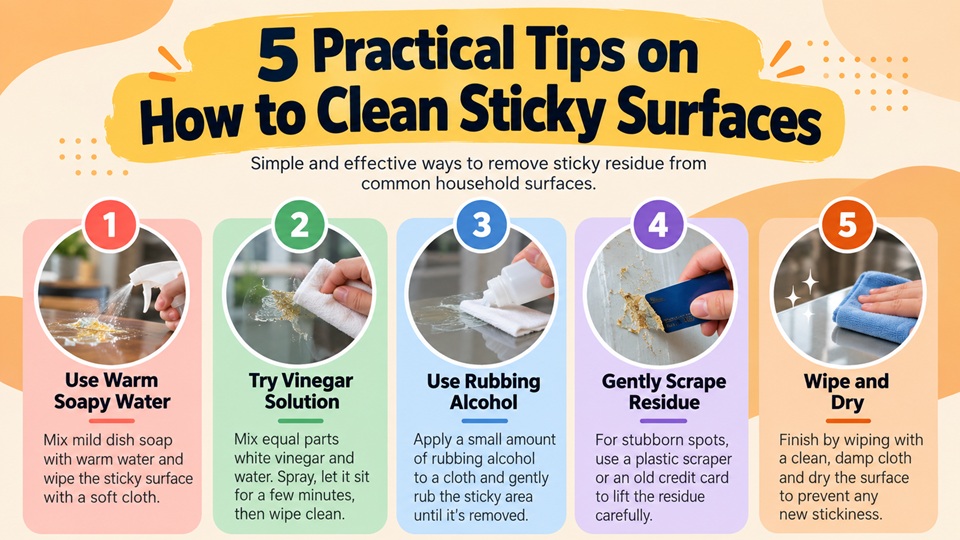
Knowing how to clean sticky surfaces sounds simple until you actually try to remove an old sticker, tape mark, glue, or something that has been sitting on a surface for months. Sometimes water and a cloth are enough, but other times you can scrub for several minutes and the sticky feeling is still there. The reason is that different types of adhesive react differently to water, heat, oil, and cleaning products.
I normally think about what caused the stickiness and what material I am cleaning before choosing a method. Glass and metal can usually tolerate more aggressive cleaning than painted furniture or certain plastics. If you are dealing with sticky residue at home or in a workshop, these five methods are good places to start.
One option that people may not immediately think of is WD-40, which is very popular in Asia. We found that it is also quite well known on jenstore.com, one of the well known local ecommerce websites in Thailand. Most people know it for lubricating moving parts or loosening stuck components, but WD 40 Multi Use Product can also help dissolve adhesive residue left by stickers, labels, and tape. This makes it particularly useful when ordinary soap and water are not doing much.
The basic method is quite simple. Apply a small amount to the sticky area and give it some time to work into the residue. You can then wipe the area using a soft cloth or sponge. If some adhesive remains, repeat the process rather than immediately trying to scrape it aggressively.
This can be useful on materials such as metal, glass, painted metal, and many hard plastics. However, I would still test it on a small hidden area first, especially when you are not sure what type of plastic or coating you are dealing with. WD 40 itself advises avoiding some materials including polycarbonate and clear polystyrene, so checking the surface first matters.
Before bringing out a stronger cleaning product, warm water and dish soap are worth trying. This is especially true when the sticky residue is fresh or comes from something like a food label rather than a strong industrial adhesive.
Mix a small amount of dish soap with warm water and soak a cloth in it. Place the wet cloth over the residue for a few minutes rather than immediately scrubbing. The idea is to give the warm water time to soften the adhesive.
For removable objects such as glass jars, bottles, and some plastic containers, soaking the entire item may be even easier. Once the adhesive becomes soft, rub it away with your fingers, a cloth, or a soft sponge.
The advantage of starting here is that it is relatively gentle. If it works, you do not need to use anything stronger.
Heat can help when you have a sticker or tape that refuses to peel away cleanly. A hair dryer is probably the easiest tool for this because you can gradually warm the adhesive without soaking the surface.
Hold the hair dryer a reasonable distance away and warm the sticker for a short period. Once the adhesive starts to soften, slowly lift one corner and peel it back. If it becomes difficult again, apply a little more heat rather than pulling harder.
This method can be particularly useful when you want to remove the sticker itself before dealing with the remaining residue.
Be more careful with heat sensitive plastics, painted finishes, and delicate surfaces. More heat does not automatically mean better results. You only need enough to soften the adhesive.
Rubbing alcohol is another useful option for certain adhesive residues, particularly on glass and other compatible hard surfaces. Put a small amount on a cloth or cotton pad and work it gently over the sticky area.
You may notice the adhesive gradually transferring onto the cloth rather than coming away as one piece. Keep moving to a clean part of the cloth so you are removing the residue instead of spreading it around.
Again, the material matters. Alcohol can affect some coatings, paints, plastics, and finished surfaces. I would not assume that something safe for a glass jar is automatically safe for a painted table. Testing a hidden area first only takes a minute and can prevent a much bigger problem.
Sometimes the cleaning product has already loosened the adhesive but you still need a little physical help to remove it. This is where the tool you choose becomes important.
A plastic scraper, old plastic card, or similar flat plastic edge can help lift softened residue without being as aggressive as a metal blade. Keep the angle low and push gently rather than digging the edge directly into the surface.
Metal blades may work quickly on certain types of glass, but using them without knowing what you are doing can leave scratches or damage coatings. For most everyday cleaning jobs, I would rather spend another minute working with a plastic edge than risk permanently marking the surface.
There is no single method for how to clean sticky surfaces because the safest solution depends on both the adhesive and the material underneath it. Warm soapy water is a sensible starting point for lighter residue, while heat can help soften stickers before removal. Rubbing alcohol and WD 40 can be useful when the adhesive is more stubborn.
What matters most is not trying to remove everything with force. Give the cleaning method time to loosen the adhesive, use a soft cloth or plastic scraper where possible, and test unfamiliar products on a hidden area first. In many cases, that makes the job easier while reducing the chance of turning a small sticky mark into permanent surface damage.








Get all latest content delivered to your email a few times a month.

